
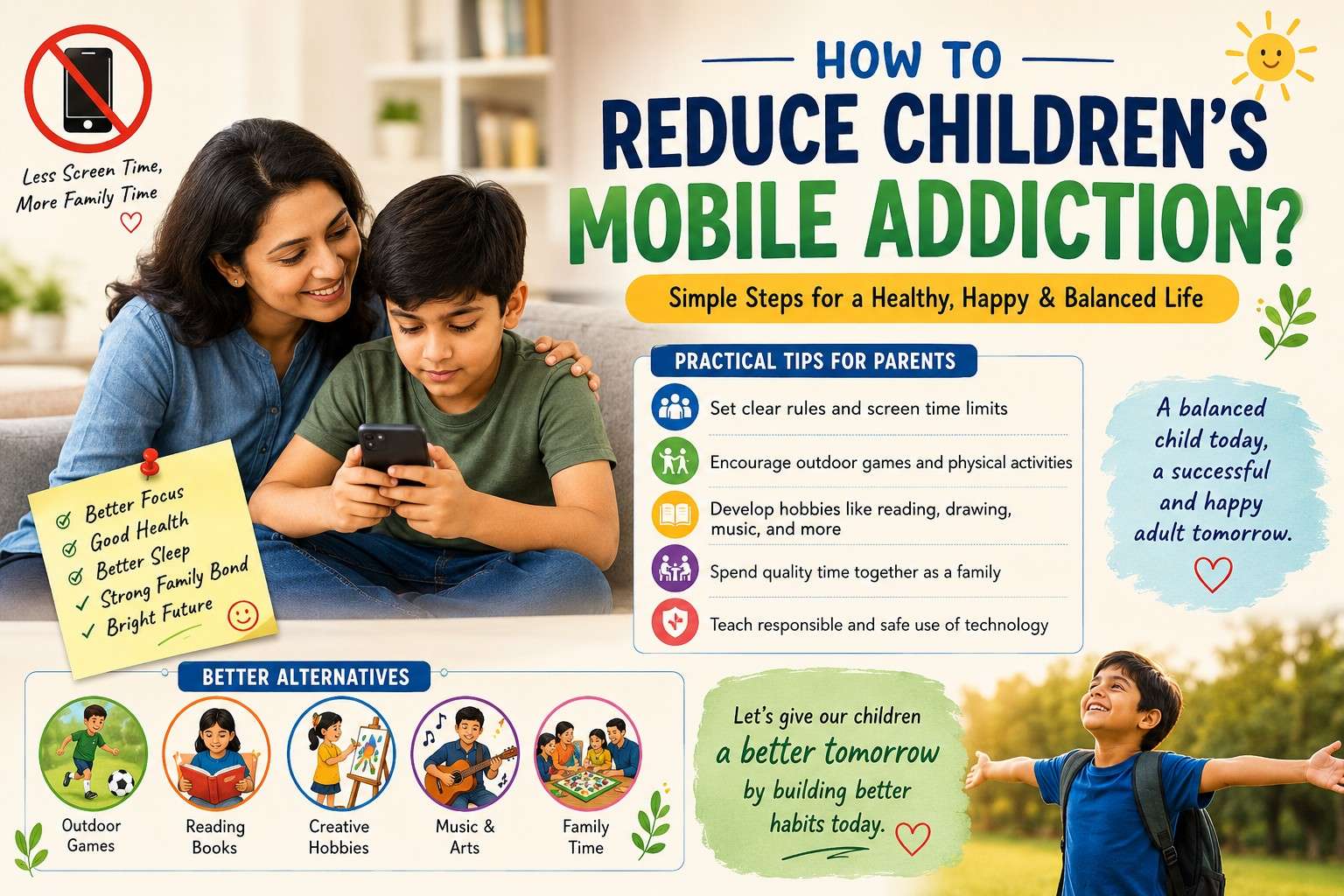
Is Your Child Spending Too Much Time on Mobile?
In today’s digital world, mobile phones have become a part of our daily lives. They help us learn, communicate, and stay entertained. But when children spend too much time on mobile phones, it can slowly affect their studies, health, sleep, and family relationships.
Many parents often say, “My child doesn’t listen to me. As soon as I take away the phone, they become angry.” If you are facing the same problem, don’t worry. You are not alone, and the good news is that mobile addiction can be reduced with patience, understanding, and the right habits.
Let’s understand how.
Why Are Children Becoming Addicted to Mobile Phones?
Children enjoy mobile phones because they provide instant fun. Games, YouTube videos, social media, and short reels keep them engaged for hours without realizing how much time has passed.
Some common reasons include:
- Easy access to smartphones
- Online classes leading to increased screen use
- Lack of outdoor activities
- Friends spending time online
- Parents themselves using phones frequently
- Boredom during free time
The mobile phone itself is not the problem. The real challenge is using it without limits.
Signs of Mobile Addiction
Parents should watch for these warning signs:
- Spending several hours on the phone every day
- Becoming angry or upset when the phone is taken away
- Losing interest in studies or hobbies
- Sleeping late because of mobile use
- Ignoring family conversations
- Difficulty concentrating while studying
- Frequently checking notifications without any reason
If you notice several of these signs, it is time to make small but positive changes.
How Mobile Addiction Affects Children
Excessive mobile use can lead to:
Poor Academic Performance
Children find it difficult to focus on homework and revision. Even a quick look at the phone can break concentration.
Sleep Problems
Using screens before bedtime reduces sleep quality. A tired mind cannot learn effectively the next day.
Eye Strain and Headaches
Long hours of screen time may cause dry eyes, blurred vision, and headaches.
Less Physical Activity
Children who spend more time on mobile phones often spend less time playing outside, which affects their physical health.
Emotional Changes
Too much screen time can increase stress, impatience, and mood swings.
Practical Ways to Reduce Mobile Addiction
1. Set Clear Mobile Rules
Create simple family rules such as:
- No mobile during meals.
- No phone while studying.
- No screen one hour before bedtime.
- Limited screen time on weekdays.
Children follow rules better when they are clear and consistent.
2. Be a Role Model
Children learn by watching adults.
If parents spend most of their time on mobile phones, children naturally do the same.
Try to keep your own phone aside during family time. Your actions teach more than your words.
3. Encourage Outdoor Activities
Outdoor games improve physical fitness and reduce the desire to stay on screens.
Encourage activities like:
- Cycling
- Cricket
- Football
- Badminton
- Walking
- Gardening
Even one hour of outdoor play each day makes a big difference.
4. Develop New Hobbies
When children discover enjoyable activities, they naturally spend less time on mobile phones.
Some excellent hobbies include:
- Drawing
- Painting
- Reading storybooks
- Music
- Dance
- Cooking simple recipes
- Puzzle solving
- Craft work
A busy and creative mind has less time for unnecessary screen use.
5. Create a Daily Routine
Children feel more disciplined when their day follows a routine.
A simple schedule may include:
- Study time
- Outdoor play
- Homework
- Reading
- Family time
- Limited entertainment
A balanced routine reduces unnecessary phone use.
6. Keep Phones Away During Study Time
While studying, keep the mobile phone in another room if possible.
Even silent notifications can distract children and reduce concentration.
7. Spend Quality Time Together
Children often use phones because they feel bored or lonely.
Spend time together by:
- Playing board games
- Going for evening walks
- Cooking together
- Talking about their school day
- Watching educational documentaries as a family
Children always value attention more than expensive gifts.
8. Avoid Using Mobile as a Reward
Sometimes parents say,
“Finish your homework and you can use the mobile for one hour.”
This makes the mobile seem more attractive.
Instead, reward children with experiences like:
- A picnic
- Favourite homemade food
- Extra playtime
- A visit to the library
- Family game night
9. Teach Responsible Digital Habits
Instead of saying “Mobile phones are bad,” teach children how to use technology wisely.
Help them understand:
- Why screen limits are important
- Which apps are useful
- Online safety rules
- Taking regular breaks from screens
Children should learn digital responsibility, not digital fear.
10. Appreciate Every Small Improvement
Breaking any habit takes time.
If your child reduces screen time by even 20 or 30 minutes, appreciate the effort.
Positive encouragement works much better than constant scolding.
Tips for Students
If you are a student reading this, remember:
- Your mobile should help you learn, not control your life.
- Keep your phone away while studying.
- Spend time playing outdoor games.
- Read books every day.
- Sleep on time.
- Talk to your family and friends instead of spending all your free time online.
A balanced life makes you healthier, happier, and more successful.
A Simple Family Challenge
Try this challenge for one week.
- Keep all mobile phones aside for one hour.
- Spend that time talking, reading, playing games, or going for a walk together.
Many families are surprised to discover how enjoyable this simple habit can be.
Final Thoughts
Mobile phones are wonderful tools when used wisely. They help us learn, communicate, and explore new ideas. However, when screen time becomes excessive, it can affect a child’s health, learning, and happiness.
Parents do not need to remove mobile phones completely. Instead, the goal is to create healthy habits, set clear boundaries, and spend meaningful time together.
Remember, children need guidance more than strict punishment. Small daily changes, patient conversations, and consistent family routines can gradually reduce mobile addiction and help children develop a healthy relationship with technology.
The greatest gift we can give our children is not another screen—but our time, attention, and encouragement.
Frequently Asked Questions (FAQs)
1. How many hours should children use a mobile phone daily?
There is no single rule for every child, but recreational screen time should be limited according to the child’s age. Educational use should be balanced with regular breaks, physical activity, and enough sleep.
2. Should parents completely ban mobile phones?
No. A complete ban is usually difficult and may lead to arguments. It is better to set healthy limits and teach responsible mobile use.
3. What is the best way to reduce mobile addiction?
The most effective approach is a combination of clear rules, outdoor activities, family time, hobbies, and parents setting a good example.
4. Can mobile addiction affect school performance?
Yes. Excessive screen time can reduce concentration, disturb sleep, delay homework, and lower academic performance.
5. What should parents do if their child refuses to stop using the phone?
Stay calm, avoid shouting, set consistent rules, reduce screen time gradually, and replace mobile use with enjoyable family activities and hobbies. Patience and consistency usually bring better results than punishment.
-BY BHASHASUTRA TEAM